this article focuses on the actual measurement and interpretation of the performance test of the japanese server codenamed akiko yajima in a high-concurrency scenario. we will discuss it from three perspectives: "best", "best" and "cheapest": best refers to the lowest stability and p99 latency, best refers to balanced cost performance under typical business conditions, and cheapest refers to how to obtain acceptable concurrent throughput through architecture and configuration when budget is limited. the article aims to provide practical reference for operation and maintenance, architects and procurement.
the object under test is a physical server in japan labeled "yajima akiko" by the manufacturer (hereinafter referred to as yajima akiko ). the configuration includes dual-channel cpu, 32-64gb memory, ssd, local gigabit network card or gigabit to 10 gigabit export. the test environment is deployed in the same availability zone, the network delay is 10-30ms, the back-end service is an http/https stateless application, and the database is a remote hosting service to simulate the real path.
use a combination of open source stress testing tools: jmeter is used for concurrent scripts, wrk is used for sustained high concurrency short connection stress testing, and ab is used to compare simple request performance; the monitoring is to collect cpu, memory, disk io, network card and kernel indicators through prometheus+grafana; each group of tests is repeated 3 times and the median is taken, and the load gradually increases from 100 concurrency to the peak until the error rate or delay is unacceptable.
the main indicators of concern include: throughput (rps/tps), average response delay, p50/p95/p99 delay, error rate (5xx, connection timeout), cpu utilization, memory usage, disk io wait, network bandwidth utilization, context switching and socket queue length. the test also records system level parameters such as
the number of tcp connections and ulimit settings (both monitoring items).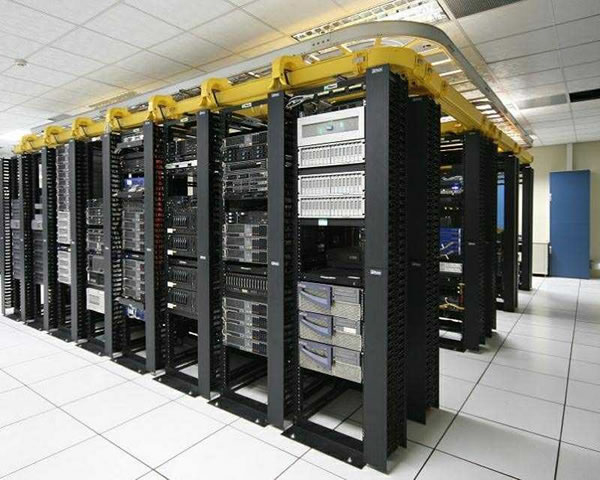
scenarios include short-connection high concurrency (1000+ concurrent short-term requests), long-connection high concurrency (keep-alive scenario), sudden peaks (short-term rps doubling), stable high traffic (high load lasting 30 minutes), and mixed read and write scenarios. each scenario was executed under default configuration and optimized configuration to evaluate the improvement of hardware and system optimization.
under the default system parameters, yajima akiko stably maintains about 2k-4k rps in the short connection scenario, and the p95 delay is between 120-250ms; in the keep-alive scenario, the throughput can be increased to 4k-8k rps and the p95 drops to 60-150ms. the increase in error rate when reaching the peak is mainly due to file descriptor and socket backlog saturation, rather than pure cpu saturation.
through monitoring, we found that disk io has little impact on static resources, and cpu and network are the main bottlenecks. default tcp kernel parameters (such as net.core.somaxconn, tcp_max_syn_backlog) and ulimit limits cause the connection queue to overflow, manifesting as short-term errors and latency spikes. after optimization (adjusting kernel parameters, turning on tcp_tw_reuse, increasing ulimit, adjusting keepalive) the delay is significantly reduced and the error rate is reduced.
recommended tuning for high concurrency scenarios includes: 1) increase ulimit and the number of socket file descriptors; 2) adjust net.core.somaxconn and tcp_max_syn_backlog; 3) enable keep-alive and connection reuse; 4) adjust the application thread pool and asynchronous io model; 5) use nginx or lvs for front-end connection aggregation and health check. often the improvements brought by these soft optimizations exceed those of simply adding machines.
if you are pursuing the "best" stability and the lowest p99, it is recommended to choose a model with higher intranet bandwidth and stronger cpu frequency and cooperate with network optimization; if you are pursuing the "best" cost performance, you can optimize the system and application layer based on mid-range cpu + ssd to achieve performance close to high-end models; if you are pursuing the "cheapest", you should divide the business into static and dynamic traffic, use cdn for static, and ensure the availability of core services through connection pooling and current limiting for dynamic use.
overall, the japanese server codenamed yajima akiko performs well in high-concurrency scenarios after optimizing system parameters and application layers, and can provide stable throughput while maintaining a low p95/p99. when choosing, it is recommended to first conduct a small-scale stress test and replicate the business traffic, prioritize the optimization of the kernel layer and connection layer, and then decide whether to expand horizontally. finally, continuous monitoring and automated scaling strategies are critical to long-term stability.
- Latest articles
- Popular tags
-

All The Steps To Resolve Japanese Servers Can Make It Easy For You To Get Started
this article analyzes the operation steps of japanese servers in detail, helping users to easily get started, and provides real cases and server configuration data. -
Amazon Japan Site Evaluation Wechat Group Management Standards And Practical Reference For Formulation Of Group Rules
this article is a practical reference for the formulation of wechat group management specifications and group rules for amazon japan site evaluation, covering account and evaluation process specifications, security and privacy protection, server/vps and cdn deployment, high-defense ddos protection and recommended service providers. -

How To Directly Connect To Japanese Native Ip To Ensure Stable Data Transmission In Cross-border Office Scenarios
a practical guide for cross-border offices: how to ensure low latency, low packet loss rate and compliant data transmission stability through direct connection to japanese native ip, bgp peering, sd-wan and encryption.